
Sales Leadership: Building and Retaining High-Performing Teams
Three Keys to Successful Sales Leadership
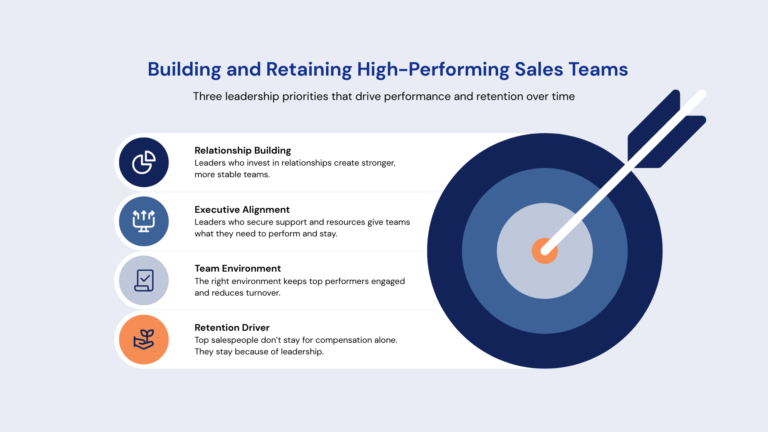
Managing a sales team is a complex job. It changes depending on company size, growth stage, and expectations. In some roles, you’re still selling. In others, you’re setting direction. Leaders who invest in relationships not only build stronger teams, they retain them.
Regardless of the context, the responsibility is the same: build a strong team and keep it. Sales leadership isn’t just about driving results. It’s about hiring the right people, developing them, and creating an environment where they stay and perform.
Yet, in all sales leadership positions, you’ll have to have command of more than just sales skills; you’ll need to be able to lead others. Salespeople may come for the money, but they stay because they trust the leadership and believe in the company’s vision, which is why strong sales leadership plays such a large role in retention.
#1–Strong Leaders Know Building Relationships is a High Priority
As in sales, leadership requires relationship building skills. People won’t buy from people they don’t like.
They also won’t buy from people who have no interest in their personal welfare. Likewise, teams don’t buy from leaders who aren’t invested in their people.
Leaders who know about their colleagues will fair better than those who treat teammates like revenue numbers on a spreadsheet.
Leaders learn about the people they spend 10 to 12 hours a day with. They find out where they are from, what they like to do, what inspires them, why they chose sales as their career, what their proudest accomplishments are, and what advice they want to pass on to their children.
Getting to know colleagues is important. Leaders don’t let thoughts of future terminations, PIP plans, and other tough conversations prohibit relationship-building efforts.
“Example is leadership.” — Albert Schweitzer
#2–Strong Sales Leaders Value Executive Buy-In. The Know the Must Have it to Support their Team
Getting the right resources, infrastructure, and executive support is essential. Strong sales leaders achieve executive buy-in to help drive change. Change can’t take place without the right power base supporting the effort.
Sales leaders who garner support across the organization and at the right levels make immediate and impactful changes. They can provide the sales team with the necessary resources and support needed to achieve revenue goals.
However, sales leaders who are unable to secure high levels of executive support won’t be able to drive the change needed to gain the trust and confidence of the sales team.
This is where teams lose confidence and turnover starts to build, both at the leadership level and across the sales organization, and experienced software sales recruiters often see this show up in hiring challenges and failed searches.
#3–Strong Sales Leaders Promote and Foster a Supportive and Respectful Environment
Sales is not an easy job.
The last thing salespeople need is a critic for a boss. Sales leaders who are supportive, available, and willing to help tend to have the longest job tenure.
It’s always easy to be a critic, but providing the sales team with coaching, resources, respect, and recognition requires continuous effort.
Hiring right to begin with also helps. According to Paul Marciano, the author of Carrots and Sticks Don’t Work, “When hiring, your first concern should be to find people who are going to actively support and contribute to your organization’s culture.
Incorporate discussions about respect and your corporate culture into your interviewing and orientation process….”
This is the kind of environment that keeps strong salespeople engaged and reduces unnecessary turnover.
The right leaders create team environments that produce results, support teamwork, and share knowledge, which is how high-performance sales cultures are built and sustained. Leaders make every team member stronger through their influence.
John Wooden couldn’t have said it better, “Success is giving 100 percent of your effort, body, mind and soul to the struggle.”
Strong leaders focus on driving performance and building teams that last. They develop people over time and create environments where top performers want to stay. That’s what separates short-term results from sustained success.
